söndag 12 januari 2014

Inget för ailurofobikern

 Det finns gott om kattlitteratur, både hos Gutenberg och annorstädes — men det är de gutenbergska katterna jag tänkt ägna mig åt ett tag framöver, och jag börjar med:

FELINE PHILOSOPHY

BY THOMAS CAT

RENDERED INTO ENGLISH
BY

WALTER LÉON HESS


FIRST CATERWAUL

The family have gone to the country,
Horton, his wife and four children.
They took the butler and maids, the dogs,
The canaries and parrot. Shutters
They put on the house and the keys
Are turned in the locks. The silver
Was put in the vault and everything
Valuable carefully stowed....
Little Jack
Looked well for me. But when he found me
Was told to put me outside; a cat has no
Place in a house that is closed for
The summer.
When they were sorely troubled
With rats and mice they coaxed me to
Come to live in the cellar. They fed
Me richly on cream and the choicest
Bits from their lavish table. They gave
Me a rug to sleep, and taught the children
To pet me. All took turns to feed me and
They saved the bones of each fish.
The
Mice and rats disappeared; the rug
Is filthy, in tatters. Old Horton curses
And kicks me and kicks me down stairs when he
Meets me; warns the baby to heed my
Claws and the older children that
Cats breed all sorts of diseases. Edith
Has young men to call and “cannot abide
The cat that is covered with ashes.”
Only Jack remembers—which reminds me
How well I was treated. I was young when
They found me and now have grown wise in
Their councils.
I have no food and no
Lodging.


SECOND CATERWAUL

It’s more than a week since I’ve eaten
And my bed is made in the gutter. Well-fed
And beggars go by and their boots are
All alike ready as soon as they spy me.
Jack Horton went by with his father and
Stooped to whisper his secret. Old Horton
Jerked his arm and urged that he’d miss
The train. So even railroad time
Seems relentless as the procession
Passes over and about me. Between buying
A new suit for his party
And his affection
Even young Jack had no choice.
Now I have to hunt
And I’ve eaten a sparrow for breakfast.
I ate with infinite relish
Though I never ate one before;
I was starved and the murder and crime
Were lost in my terrible necessity.
My depravity is beginning to wear....
I shall wander down to the river....
I have heard Jack’s father say:
When a man falls so low as that
He had better drown himself than—
I’ve forgotten the rest; I cannot think
In my present state of mind.
Boken består av 50 klagovisor, "caterwaul", eller katzenjammer för att använda ett annat utländskt ord. Men har vi använt det sedan 1845, så kanske det kan passera. (HIST.: sedan 1845; av ty. Katzenjammer med samma bet., till Katze 'katt' ochJammer 'jämmer; oljud') För den ömhjärtade kattvännen, kan jag berätta att det slutar lyckligt, så läs på!

lördag 11 januari 2014

Söndagsmiddag

Det finns nog ingenting som Gutenberg inte kan hjälpa till med. Ingen aning om vad du ska servera till middagen i morgon — Gutenberg vet! Eller snarare Elizabeth O. Hiller, som 1913 skrev
 boken Fifty-Two Sunday Dinners, en bok som gör reklam för "Cottolene", ett matfett som fanns i handeln mellan 1868 och mitten på 1950-talet, tillverkat av talg från nötdjur och bomullsfröolja. Skulle jag mot förmodan prova något av recepten, skulle jag använda smör.


January
Second Sunday

Menu

Consommé with Egg Balls

Celery             Olives

Breaded Sea Bass—Sauce Tartare

Norwegian Potatoes             Stewed Tomatoes

Cabbage Relish

Lemon Pie             Cheese

Café Noir
Jag blev lite nyfiken på den norska potatisen, men sedan jag läst receptet insåg jag att det inte är något för mig — varken ingredienserna eller den kladdiga rätt omständiga tillagningsproceduren:
NORWEGIAN POTATOES
Wash, scrub and pare six medium size potatoes. Cook in boiling salted water until tender. Drain, pass through ricer. Add six anchovies drained from the oil in bottle and cut in one-fourth inch pieces, one-half teaspoon finely chopped parsley, one-half teaspoon French mustard, salt if necessary, one-eighth teaspoon pepper, a few grains nutmeg, two tablespoons butter, and yolks two eggs slightly beaten. Beat thoroughly, place on range and cook slowly three minutes, stirring constantly. Remove from range, spread mixture on plate to cool, then mold like small eggs. Roll in crumbs, egg and crumbs. Arrange in croquette basket and fry a golden brown in deep, hot Cottolene.
Boken fick mig att fundera över företeelsen söndagsmiddag. Så här står det i förordet:
The title of "52 Sunday Dinners" has been given the book because Sunday dinners as a rule are a little more elaborate than the other dinners of the week, but from these menus may be gleaned helpful hints for daily use.
Är söndagsmiddagen fortfarande något utöver den vanliga middagen? Har det bytts ut mot lördagsmys — eller är det fredagsmys? (en slump att mysa och rysa rimmar?). Jag har ingen aning, inte ens på den tiden det åts slottsstek med vinbärsgelé i stugorna på söndagarna, så ägnade vi åt sådant. 

måndag 6 januari 2014

Snudd på blasfemi

1vän´ subst. ~nen ~ner 
ORDLED: vänn-en
1 person som (viss) annan person känner 
väl samt hyser tillgivenhet för och tillit till men 
som vederbörande vanl. inte är släkt med
HIST.: sedan äldre fornsvensk tid; fornsv. vin, ven, vän; gemens. 
germ. ord, nära besl. med lat. venus 'behag', se veneration
Burma, Rakhine State, Gyi Dawma Village, 
Two Young Friends at Gyi Dawma Village, Myanmar
foto Nigel Pavitt
 Eller åtminstone verbal inflation, att kalla ting och bekanta för vänner. I en bokklubbstidning läser jag "Låt paddan bli din bästa vän". Man vill sälja boken "Min iPad", jag tvivlar inte ett ögonblick på att boken är instruktiv eller att man kan ha mycket glädje av sin iPad — men därifrån är ju steget långt till att att låta ett ting bli ens bästa vän. särskilt förvånad är jag inte, det är inte första gången jag lägger märke till den sortens krampaktiga bokreklam — för att inte tala om alla "finaste vännen" som man så frikostigt gödslar tal och skrift med nu för tiden. Vad har man kvar till sina riktiga vänner?
Thank You Friends 
Frances Beem

Så finns ju adjektivet vän — frågan är om en padda kan vara vän? Ja, frågan är om man överhuvudtaget använder adjektivet vän längre.
2vä´n adj. ~t 
• mild och vacker
 särsk. om ung kvinna ngt 
högt.: 
han betraktade ömt den ~a varelsen vid sin sida; 
sagan om den ~a Snövit
KONSTR.: ~ (mot ngn)HIST.: 

sedan äldre fornsvensk tid; 
fornsv. vän 'fager'; bildn. till vån

söndag 5 januari 2014

På julens tolfte dag


sitter jag här med en bok jag läst under helgen, och som till min förvåning berörde mig mycket: "A Childhood at Green Hedges" av Imogen Smallwood, Enid Blytons yngsta dotter. Jag har ägnat rätt mycket tid åt Enid Blyton på sistone, och kommer att återkomma till henne — bara jag kan räkna ut, hur jag ska kunna begränsa mig, för det finns mycket att säga om både henne och hennes böcker.
Den här boken är slut på förlaget, men en väninna i England lyckades få tag på den åt mig. För den intresserade blir det till att söka på nätet.


Jag rekommenderar "The Book of Christmas, by Thomas K. Hervey


TWELFTH DAY AND TWELFTH NIGHT.

6th January.
Twelfth-day (so called from its being the twelfth after Christmas Day) is that on which the festival of the Epiphany is held. This feast of the Christian Church was instituted, according to Picart, in the fourth century, to commemorate the manifestation of our Saviour to the Gentiles; and the name Epiphany (
Επιφανεια
), which signifies an appearance from above, was given to it in allusion to the star described in Holy writ, as the guide of the Magi or Wise Men to the cradle of the Blessed Infant. "In Italy," says Mr. Leigh Hunt, "the word has been corrupted into Beffania or Beffana, as in England it used to be called Piffany; and Beffana in some parts of that country has come to mean an old fairy or Mother Bunch, whose figure is carried about the streets, and who rewards or punishes children at night, by putting sweetmeats or stones and dirt into a stocking hung up for the purpose, near the bed's head. The word 'Beffa,' taken from this, familiarly means a trick or mockery put upon any one; to such base uses may come the most splendid terms!" But what is quite as extraordinary as that the primitive signification of a word not familiarly understood should, amid the revolutions of centuries, be lost in a different or distorted into an inferior meaning, is the preservation in popular rites of trivial details, which, as we have before stated, conclusively identify many of the practices of our modern Christian festivals as echoes of ancient pagan observances. Of this, Twelfth-day presents a remarkable instance.

_ _ _A pleasant custom of this kind is mentioned in the Gentleman's Magazine for 1791, as existing in certain parts of Devonshire. It is there stated that "the farmer, attended by his workmen with a large pitcher of cider, goes to the orchard on this evening; and there, encircling one of the best bearing trees, they drink the following toast three times:—
"Here's to thee, old apple-tree!
Whence thou mayst bud, and whence thou mayst blow!
And whence thou mayst bear apples enow!
Hats full! caps full!
Bushel, bushel-sacks full!
And my pockets full too!—Huzza!"
This done they return to the house, the doors of which they are sure to find bolted by the females, who, be the weather what it may, are inexorable to all entreatries to open them till some one has guessed at what is on the spit, which is generally some nice little thing difficult to be hit on, and is the reward of him who first names it. The doors are then thrown open; and the lucky clodpole receives the titbit as a recompense. Some, it is added, "are so superstitious as to believe that if they neglect this custom the trees will bear no apples that year."
"Health to thee, good apple-tree!Well to bear, pockets full, hats full,
Pecks full, bushel-bags full,"—
is another version of the address used on these occasions, preserved by Brand. We find recorded in one quarter or another a variety of analogous and other customs observed in different parts of England on this vigil; but our diminishing space will not permit us to enter upon a description of them. 

lördag 4 januari 2014

På julens elfte dag


läser jag Gun-Britt Sundströms "Bitar av mig själv".

Själv blir egen
Så skönt det är att efter en lång arbetsdag eller efter en bjudning med mycket folk, när man kommer hem och får klä av sig rollen och bli sig själv. Att vara ensam heter numera gärna att vara själv, och kanske är det bara när man är själv som man är sig själv.
Är man själv för mycket kan man lätt dock bli egen, något som jag själv har tillfälle att iakttaga eftersom jag sedan flera år är min egen. Som egen företagare, rörelseidkare i ordbranschen, tillbringar jag hela dagarna utan att så mycket som byta ett ord med någon levande varelse. I brist på annat sällskap börjar man snart umgås med Paranoia och Misantropia. Lämnad åt sig själv går man väl till sist ner sig totalt i sina idiosynkrasier och blir idiot (grek. idios = egen).
Om jag inte redan är helknäpp utan bara halvprillig så beror det nog på att jag inte är ensamstående annat än på arbetstid utan har mina egna därhemma. När man öppnar dörren till sitt eget och möter ett kaos åstadkommet av barnen med vidhängande kompisar, då blir man galen på ett annat mer socialt sätt.


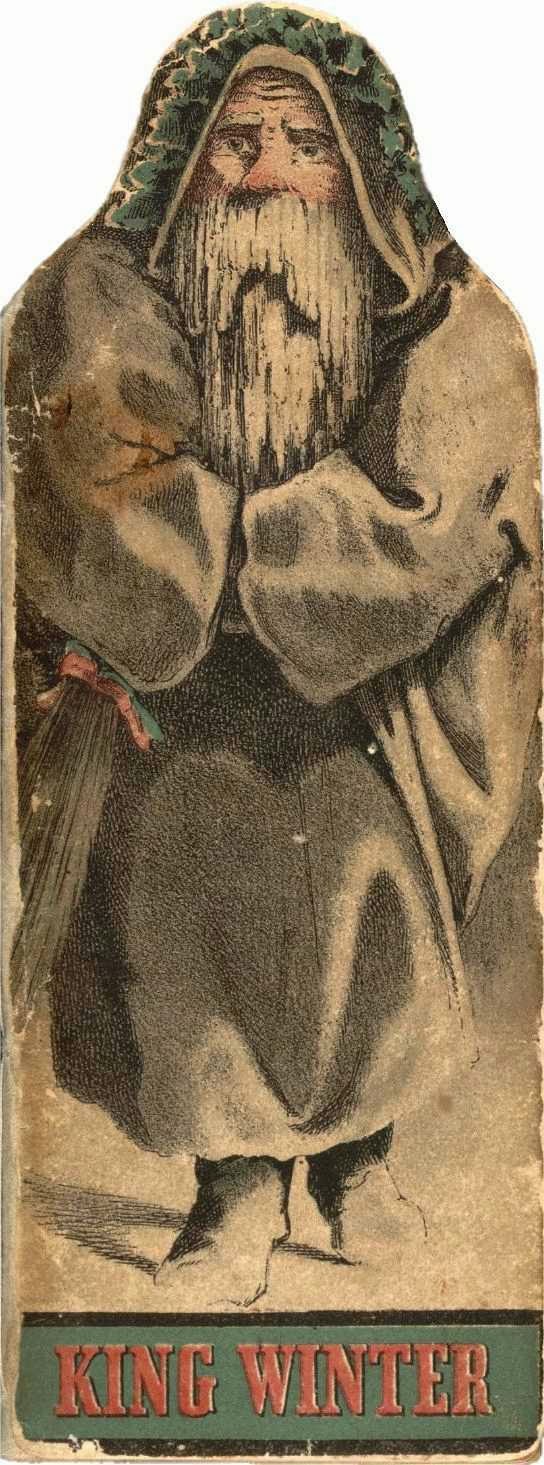
I recommend "King Winter", by Anonymous

 The sky is dull and grey,
Piercing and chill the blast,
Each step resounds on the frosty ground,
Winter is come at last.

Mamma sits by the fire
Her little ones round her knees.
"How cosy we are, Mamma," they cry,
"Tell us something, if you please."

 "Tell us about King Winter,
And about Jack Frost, his man;
We'll not be noisy or naughty at all,
But as good as ever we can."

"Well then;" says mamma, "you, Jenny,
May knit and listen, my dear;
And Johnny may split up wood, to make
The fire burn bright and clear."

fredag 3 januari 2014

På julens tionde dag


läser jag i en julklappsbok. Minns ni att jag nyligen talade om Emily Carr? När jag upptäckte att Bokus hade böcker om, och av henne, kunde jag ju inte motstå en av dem, "Wild Flowers", med illustrationer av Emily Woods. Det är korta texter, vinjetter kallas de i boken, om olika kanadensiska växter — texter hon skrev när hon var för sjuk för att måla 1940 -41. 
Sedan tog det 65 år innan boken kom ut postumt. 


I dag tycker jag att du ska läsa "Christmas Comes but Once A Year  Showing What Mr. Brown Did, Thought, and Intended to Do, during that Festive Season.  Author: Luke Limner  Illustrator: (Bros.) Dalziel
 VERY cold, very bleak; the thermometer and snow are falling fast; eggs and suet are rising faster; everything at this season is “prized,” and everybody apprizes everybody else of the good they wish them,—“A Merry Christmas and a Happy New Year!” Even the shivering caroller, for “it is a poor heart that never rejoices,” is yelling forth the “tidings of comfort and joy.” The snow that descends, making park and common alike—topping palace and pigsty, now crowns the semi-detached villas, Victoria and Albert. They were erected from the 2designs of John Brown, Esq. and his architect (or builder), and are considered a fine specimen of compo-cockney-gothic, in which the constructor has made the most of his materials; for, to save digging, he sank the foundation in an evacuated pond, and, as an antidote to damp, used wood with the dry-rot—the little remaining moisture being pumped out daily by the domestics. The floors are3delightfully springy, having cracks to precipitate the dirt, and are sloped towards the doorways, so that the furniture is perpetually trying to walk out of the rooms; but those apertures are ingeniously planned to prevent the evil—the doors obstinately refusing to open at all, without force. That the whole may not appear too light, few windows are introduced. By casual observers the Victoria and Albert would be taken for one—so united are they; and had we not seen the parting division, we should have doubted also. Of the entrance lodges, we have noticed one of the chimneys smoking periodically; and, from the mollient white vapour issuing over the window at such times, presume Victoria is washing, whilst Albert is locked up and doing nothing.

torsdag 2 januari 2014

På julens nionde dag


sitter jag här med Grace Hill Livingstones (1865-1947) bok "The Gold Shoe" i knäet. Den utspelar sig inte i juletid, som flera av Grace Hill Livingstones böcker gör, men jag hittade den i bokyllan en jul. Det var en jul när jag var sjuk och letade efter något lättsmält. Och jag fick precis vad jag behövde, en bok med ett gott språk, hemtrevliga interiörer och det godas seger över det onda.
Är det någon som tycker att författarens namn låter bekant, så kan det bero på att jag talat om henne i tidigare inlägg. Hon skrev många böcker, och var mycket populär — blir du nyfiken på henne så har Gutenberg några av hennes böcker. Skriver man så många böcker som hon gjorde, av nödtvång för att försörja sig, så är det nog ofrånkomligt att produktionen blir ojämn. Jag kan tycka att det är irriterande när hon klämmer in spännande händelser — hon behärskar inte kidnappare och andra bovar, det blir sämsta sortens parodi på spänning. Däremot kan hon beskriva ett rum eller måltid, så man önskar att man var närvarande.


I dag rekommenderar vi "Christmas Eve at Swamp's End, av Norman Duncan

 It was Christmas weather in the big woods: a Christmas temperature like frozen steel—thirty below in the clearing of Swamp's End—and a rollicking wind, careering over the pines, and the swirling dust of snow in the metallic air. A cold, crisp crackling world! A Christmas land, too: a vast expanse of Christmas colour, from the Canadian line to the Big River—great, grave, green pines, white earth and a blood-red sunset! The low log-cabins of the lumber camps were smothered in snow; they were fringed with pendant ice at the eaves, and banked high with drifts, and all window-frosted. The trails were thigh deep and drifting. The pines—their great fall imminent, now—flaunted long, black arms in the gale; they creaked, they swished, they droned, they crackled with frost. It was coming on dusk. The deeper reaches of the forest were already dark. Horses and teamsters, sawyers, road-monkeys, axemen, swampers, punk-hunters and all, floundered from the bush, white with dry snow, icicled and frosted like a Christmas cake, to the roaring bunk-house fires, to a voracious employment at the cooks' long tables, and to an expanding festival jollity. Town? Sure! Swamp's End for Christmas—the lights and companionship of the bedraggled shanty lumber-town in the clearing of Swamp's End! Swamp's End for Gingerbread Jenkins! Swamp's End for Billy the Beast! Swamp's End—and the roaring hilarity thereof—for man and boy, straw-boss and cookee, of the lumber-jacks! Presently the dim trails from the Cant-hook cutting, from the Bottle River camps, from Snook's landing and the Yellow Tail works, poured the boys into town—a lusty, hilarious crew, like loosed school-boys on a lark, giving over, now, to the only distractions, it seemed—and John Fairmeadow maintained it—which the great world provided in the forests.
Pattie Batch might have been aware of this—the log shack was on the edge of town—had not the window-panes been coated thick with Christmas frost. She might have heard rough laughter passing by—the Bottle River trail ran right past the door—had not the big Christmas wind snored in the stove, and fearsomely rattled the door, and shaken the cabin, and swept howling on. But she never in the world would have attended. Not in that emergency! She would not, for anything, have peeped out of the windows, in perfectly proper curiosity, to watch the Bottle River jacks flounder into town. Not she! Pattie Batch was busy. Pattie Batch was so desperately employed that her swift little fingers demanded all the attention that the most alert, the brightest, the very most bewitching gray eyes in the whole wide world could bestow upon anything whatsoever. Christmas Eve, you see: Day done. Something of soft fawn-skin engaged her, it seemed, with white patches matched and arranged with marvellous exactitude: something made for warmth in the wind—something of small fashion, but long and indubitably capacious—something with a hood. A little cloak, possibly: I don't know. But I am sure that it could envelop, that it could boil or roast, that it could fairly smother—a baby! It was lined with golden-brown, crackling silk, which Pattie Batch's mother had left in her trunk, upon her last departure, poor woman! from the sordid world of Swamp's End to regions which were now become in Pattie Batch's loving vision Places of Light. And it was upon this treasured cloth that Pattie Batch's flashing needle was working like mad in the lamplight. A Christmas sacrifice: it was labour of love and the gift of treasure.
Pattie Batch was lovely. Everybody knew it; and there's no denying it. Grief had not left her wan and apathetic. She had been "a little man." She had been so much of a little man that she was now much more of a little woman than ever she had been before. In respect to her bewitching endearments, there's no mincing matters, at all. It would shame a man to 'hem and haw and qualify. She was adorable. Beauty of youth and heart of tenderness: a quaint little womanly child of seventeen—gowned, now, in a black dress, long-skirted, to be sure! of her mother's old-fashioned wearing. Gray eyes, wide, dark-lashed, sun-sparkling and shadowy, and willful dark hair, a sweetly tilted little nose, a boyish, masterful way, coquettish twinkles, dimples in most perilous places, rosy cheeks, a tender little figure, an aristocratic toss to her head: why, indeed—the catalogue of her charms has no end to it! Courage to boot, too—as though youth and loveliness were not sufficient endowment—and uncompromising honesty with herself and all the world. She took in washing from the camps: there was nothing else to do, with Gray Billy Batch lost in Rattle Water, and now decently stowed away by the Reverend John Fairmeadow. It was lonely in Gray Billy Batch's cabin, now, of course; it was sometimes almost intolerably so—and ghostly, too, with echoes of long-past footsteps and memories of soft motherly words. Pattie Batch, however, a practical little person, knew in her own mind, you must be informed, exactly how to still the haunting echoes and transform the memories into blessed companions of her busy, gentle solitude; but she had not as yet managed the solution.
Pattie Batch wanted a baby. Companionship, of course, would be a mere by-product of a baby's presence in the cabin; the real wealth and advantage would be a glowing satisfaction in the baby. At any rate, Pattie Batch wanted one: she always had—and she simply couldn't help it. Babies, however, were not numerous at Swamp's End; in point of fact, there was only one—a perfectly adorable infant, it must be understood, a suitable child, and worthy, in every respect, of being heartily desired by any woman—which unhappily belonged to the bartender who lived with Pale Peter of the Red Elephant saloon. No use asking for that baby! Not outright. It could be borrowed, however. Pattie Batch hadborrowed it; she had borrowed it frequently, of late, and had mysteriously measured it with a calculating eye, and had estimated, and scowled in doubt, and scratched her head, and pursed her sweet red lips, and had secretly spanned the baby, from chin to toe and across the back, with an industriously inquiring thumb and little finger. But a borrowed baby, it seems, is of no use whatsoever; the satisfaction is said to be temporary—nothing more—and to leave a sense of vacant arms and a stinging aggravation of envy. So what Pattie Batch wanted was a baby to keep—a baby she could call her own and cherish against meddling—a baby that should be so rosy and fat and curly, so neat and white, so scrubbed and highly polished from crown to toe-nails, that every mother in the land, beholding, would promptly expire on the spot of amazement, incredulity and sheer jealousy.