torsdag 19 oktober 2017

1189

dagar kvar 
i

onsdag 18 oktober 2017

Grattis Logan!

THINGS TO WRITE
What things there are to write, if one could only write them! My mind is full of gleaming thoughts; gay moods and mysterious, moth-like meditations hover in my imagination, fanning their painted wings. They would make my fortune if I could catch them; but always the rarest, those freaked with azure and the deepest crimson, flutter away beyond my reach.

Logan Pearsall Smith - ibland kallad Lloyd
18 oktober 1865 - 2 mars 1946
målning av Ethel Sands, 1932

Logan som föddes i U.S.A. men tillbringade en stor del av sitt liv i England, kom från en aktad kväkarfamilj.  Mest känd är han kanske som essäist, och för sina aforismer, men han var också en baddare på korrekt engelska, och det var via hans bok "Society for Pure English, Tract 3 (1920),  A Few Practical Suggestions" som jag hittade honom.

IV. Dying Words.
Our language is always suffering another kind of impoverishment which is somewhat mysterious in its causes and perhaps impossible to prevent. This is the kind of blight which attacks many of our most ancient, beautiful, and expressive words, rendering them first of all unsuitable for colloquial use, though they may be still used in prose. Next they are driven out of the prose vocabulary into that of poetry, and at last removed into that limbo of archaisms and affectations to which so many beautiful but dead words of our language have been unhappily banished. It is not that these words lose their lustre, as many words lose it, by hackneyed use and common handling; the process is exactly opposite; by not being used enough, the phosphorescence of decay seems to attack them, and give them a kind of shimmer which makes them seem too fine for common occasions. But once a word falls out of colloquial speech its life is threatened; it may linger on in literature, but its radiance, at first perhaps brighter, will gradually diminish, and it must sooner or later fade away, or live only as a conscious archaism. The fate of many beautiful old words like teen and dole and meed has thus been decided; they are now practically lost to the language, and can probably never be restored to common use. It is, however, an interesting question, and one worthy of the consideration of our members, whether it may be possible, at its beginning, to stop this process of decay; whether a word at the moment when it begins to seem too poetical, might not perhaps be reclaimed for common speech by timely and not inappropriate usage, and thus saved, before it is too late, from the blight of over-expressiveness which will otherwise kill it in the end.

The usage in regard to these tainted words varies a good deal, though probably not so much as people generally think: some of them, like delve and dwell, still linger on in metaphors; and people will still speak of delving into their minds, and dwelling in thought, who would never think of delving in the garden, or dwelling in England; and we will call people swine or hounds, although we cannot use these words for the animals they more properly designate. We can speak of a swift punishment, but not a swift bird, or airplane, or steamer, and we shun a thought, but not a bore; and many similar instances could be given. Perhaps words of this kind cannot be saved from the unhappy doom which threatens them. It is not impossible, on the other hand, that, by a slight conscious effort, some of these words might still be saved; and there may be, among our members, persons of sufficient courage to suffer, in a pious cause, the imputation of preciosity and affectation which such attempts involve. To the consideration of such persons we could recommend words like maid, maiden, damsel, weep, bide, sojourn, seek, heinous, swift, chide, and the many other excellent and expressive old words which are now falling into colloquial disuse.

There is one curious means by which the life of these words may be lengthened and by which, possibly, they may regain a current and colloquial use. They can be still used humorously and as it were in quotation marks; words like pelf, maiden, lad, damsel, and many others are sometimes used in this way, which at any rate keeps them from falling into the limbo of silence. Whether any of them have by this means renewed their life would be an interesting subject of inquiry; it is said that at Eton the good old word usher, used first only for humorous effect, has now found its way back into the common and colloquial speech of the school.


1190

dagar kvar 
i

tisdag 17 oktober 2017

Alla dessa borden

October Afternoon, 1897

som ju inte finns i pluralis, i alla fall inte officiellt, för jag talar inte om bord utan fastmer om allt jag borde göra. Personligen tycker jag borde är värre än måsten, för de senare måste man ju hugga tag i förr eller senare — oftast senare. Men borden har en tendens att hänga över en, ända till man inser att det enda vettiga är att beta av åtminstone några av dem.
Här sitter jag och tittar ut på en blåsig och hösttrist dag och tänker att jag borde gå ut och gå — men jag har bara ingen lust.
Jag har ett antal mejl som jag borde skriva — men jag har bara ingen lust.
Dammsugaren står beredd att vandra runt i huset tillsammans med mig — men jag har bara ingen lust.
Där finns dukar och handdukar att fålla, stickningar och vävar att avsluta för att inte tala om det tunga trädgårdsbordet som ännu inte kommit en decimeter närmare garaget — och listan slutar inte här, men det gör jag.
Och vi har uppenbarligen alltid bort göra saker, i svenskan har ordet funnits sedan äldre fornsvensk tid — för att inte tala om att redan Sokrates sade till sin vän Kriton något i stil med att han vid sin höga ålder inte borde gnälla över att slutet närmade sig. Nu var det förstås Platon som lade de orden i Sokrates mun när han skrev dialogen Kriton.
Naturligtvis går det inte att jämföra min situation med Sokrates, så jag får väl masa mig ut. 

böra

bö`ra verb borde bort, pres. bör 
ORDLED: bor-de
1 lämpligen eller med rätta eller nödvändighet skola utföra viss handling, vara på visst sätt e.d. (enl. ngn norm, egen el. annans); i uttr. för uppmaning, förbud m.m. {→behöva 2, 3skola 3}: man bör göra sin plikt; han bör inte resa; du borde gå dit; det borde vi ha tänkt på
BET.NYANS: ofta försvagat, med innebörd av vänlig uppmaning ⟨mest pret.⟩: han borde skriva sina memoarer; den filmen borde du verkligen se
IDIOM: (det är alldeles) som sig bör (det är helt) i sin ordning
KONSTR.: ~ INF
HIST.: sedan äldre fornsvensk tid; fornsv. böra; inhemskt ord med germ. släktskap; urspr. 'hända; tillkomma'; besl. med bära, börja

1191

dagar kvar 
i

måndag 16 oktober 2017

Har vi det för bra?

The Food Queue, 
Joseph Edward Southall 

undrar jag i dag på världsmatdagen. För trots att det finns en hel del information på nätet om den här dagen, så finns det ingen aktuell information på svenska.
Dagen har funnits sedan 1979, och tanken är att den ska bidraga till att göra människor medvetna om fattigdom och matbrist och de bakomliggande orsakerna. Det låter futtigt med en dag om året — i synnerhet om den inte ens observeras — men förhoppningsvis ska dagens aktiviteter inspirera till ett långsiktigt handlande.
Varje år ger man dagen ett nytt tema, i år är det "Change the future of migration. Invest in food security and rural development."

1192

dagar kvar 
i

söndag 15 oktober 2017

I dag för 52 år sedan

brände David Miller sin inkallelseorder till Vietnam.


David Miller, a pacifist, burns draft card. October 1965. Bettman—Corbis
Nej, jag kände inte honom — jag var inte ens medveten om att det hände just då. Men jag kom att lära känna många killar som även de bränt sina inkallelseorder, eller helt enkelt lämnat U.S.A. för att slippa "döda sina bröder". Och jag kom att lära känna många jämnåriga tjejer som förlorat sina pojkvänner, eller makar, i Vietnam.
David var inte först med att bränna sin inkallelseorder, jag tror man började att göra det så tidigt som 1963 — men när David gjorde det den 15 oktober 1965 hade det nyligen blivit olagligt. Det ledde till att han några dagar senare greps av FBI, och fick spendera två år i fängelse.


Här kan du läsa mer om "draft-card burning".

1193

dagar kvar 
i

lördag 14 oktober 2017

Grattis Edward!

“It takes courage to grow up and 
become who you really are.”
edward estes cummings
14 oktober 1894 – 3 september 1962
självporträtt

Fast jag tror nog att de flesta känner honom som e. e. — och tänker på honom som poet. Men det var som konstnär han tänkt sig sin framtid, målande konstnär. Men man kan också läsa att han redan som barn bestämde sig för att bli poet — det är förmodligen inte lätt att bestämma sig om man är talangfull.

Noise #13

America makes prodigious mistakes, America has colossal faults, but one thing cannot be denied: America is always on the move. She may be going to Hell, of course, but at least she isn't standing still.
"Mt. Chocorua."  Oil on canvas. Ca. 1938.


1194

dagar kvar 
i

fredag 13 oktober 2017

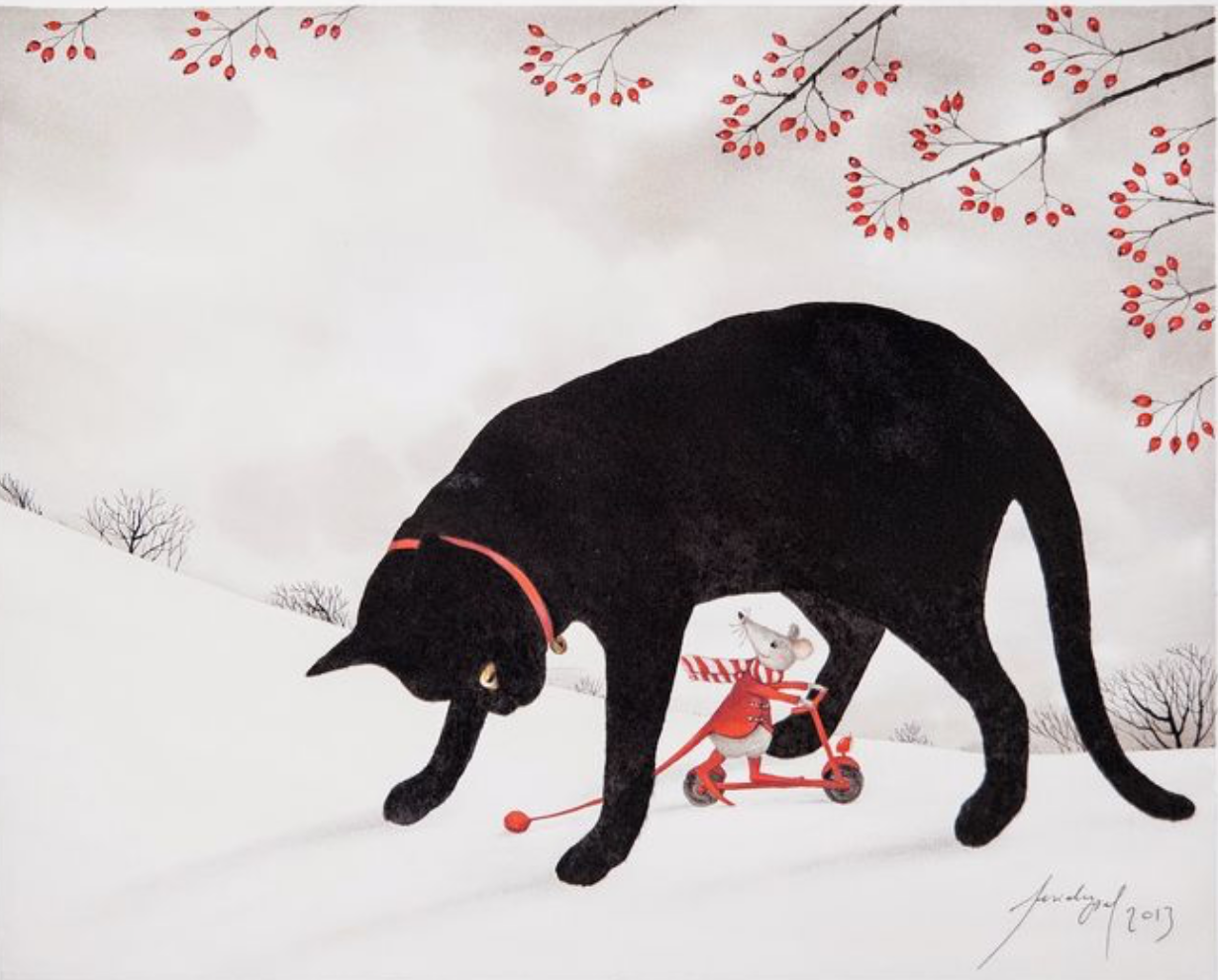
Katter i konsten


Feridun Oral är kanske främst känd som barnboksillustratör, såväl av sina egna som andras böcker, men arbetar också i lera och med texil.


1195

dagar kvar 
i

torsdag 12 oktober 2017

1196

dagar kvar 
i

onsdag 11 oktober 2017

Tack för senast!

– Åh, direktör Billkvist, utropade han. Så roligt 
att se direktören här! Hur har det gått med turnén?
– Charmångt, svarade teaterdirektören. Tack för 
senast! Vi har haft ganska goda hus överallt, men det 
är ju bekymmer jämt ändå. Nu gäller det ju att lokali- 
sera revyn, och här står som jag hoppas, vår man!
                                    sidan 389 i Kvartetten, som sprängdes II (1924)
                                        av Birger Sjöberg
Meeting, 1911

En av mina amerikanska vänner bodde ett år på Island som utbytesstudent, en gång när vi diskuterade språk och kultur sa hon att hon tyckte så mycket om uttrycket "tack för senast", som ju inte har någon motsvarighet på engelska.
Säger man fortfarande så? Jag har inte hört det på länge, och även om somliga gäster skriver efter ett besök här, så tackar de med andra ord. Och jag minns inte när jag senast mötte någon på sta'n som tackade för senast — det måste ha varit eoner sedan — möjligtvis därför att jag aldrig går på sta'n.


1197

dagar kvar 
i

tisdag 10 oktober 2017

1198

dagar kvar 
i
the East Room

måndag 9 oktober 2017

Huslighet och styrketräning


While the cooking mania lasted she went through Mrs. Cornelius's Receipt Book as if it were a mathematical exercise, working out the problems with patience and care. Sometimes her family were invited in to help eat up a too bounteous feast of successes, or Lotty would be privately despatched with a batch of failures, which were to be concealed from all eyes in the convenient stomachs of the little Hummels. An evening with John over the account-books usually produced a temporary lull in the culinary enthusiasm, and a frugal fit would ensue, during which the poor man was put through a course of bread-pudding, hash, and warmed-over coffee, which tried his soul, although he bore it with praiseworthy fortitude. Before the golden mean was found, however, Meg added to her domestic possessions what young couples seldom get on long without,—a family jar.

Fired with a housewifely wish to see her store-room stocked with home-made preserves, she undertook to put up her own currant jelly. John was requested to order home a dozen or so of little pots, and an extra quantity of sugar, for their own currants were ripe, and were to be attended to at once. As John firmly believed that "my wife" was equal to anything, and took a natural pride in her skill, he resolved that she should be gratified, and their only crop of fruit laid by in a most pleasing form for winter use. Home came four dozen delightful little pots, half a barrel of sugar, and a small boy to pick the currants for her. With her pretty hair tucked into a little cap, arms bared to the elbow, and a checked apron which had a coquettish look in spite of the bib, the young housewife fell to work, feeling no doubts about her success; for hadn't she seen Hannah do it hundreds of times? The array of pots rather amazed her at first, but John was so fond of jelly, and the nice little jars would look so well on the top shelf, that Meg resolved to fill them all, and spent a long day picking, boiling, straining, and fussing over her jelly. She did her best; she asked advice of Mrs. Cornelius; she racked her brain to remember what Hannah did that she had left undone; she reboiled, resugared, and restrained, but that dreadful stuff wouldn't "jell."

She longed to run home, bib and all, and ask mother to lend a hand, but John and she had agreed that they would never annoy any one with their private worries, experiments, or quarrels. They had laughed over that last word as if the idea it suggested was a most preposterous one; but they had held to their resolve, and whenever they could get on without help they did so, and no one interfered, for Mrs. March had advised the plan. So Meg wrestled alone with the refractory sweetmeats all that hot summer day, and at five o'clock sat down in her topsy-turvy kitchen, wrung her bedaubed hands, lifted up her voice and wept.
                                   ur Little Women, av Louisa M. Alcott

Vi har väl alla, någon gång, misslyckats i köket — en platt kaka, vidbränd middagsmat eller som här, gelé som inte vill stanna. Då kan det vara skönt att ha en Mrs. Conrad att luta sig emot. Och Mrs. Conrad når du med ett par klick, för hon finns hos Gutenberg.  
Hennes kokbok är avsedd för unga kvinnor (1858 var kvinnas plats i köket), och är fortfarande användbar, med sina enkla anvisningar. Så här skriver hon om vinbär:
Currants.
Weigh equal quantities of sugar, and fruit stripped from the stems. Boil the fruit ten minutes, stirring it often, and crushing it. Add the sugar, and boil another ten minutes. Measure the time from the minute boiling commences. This keeps till currants come again. Clean brown sugar does very well. If it is to be used up in the course of the autumn, ten or twelve ounces of sugar to a pound of fruit is enough.

Currant Jelly.
Pick over the fruit, but leave it on the stems. Put it into the preserving kettle, and break it with a ladle or spoon, and when it is hot, squeeze it in a coarse linen bag until you can press out no more juice. Then weigh a pound of sugar to a pint of juice. Sift the sugar, and heat it as hot as possible without dissolving or burning; boil the juice five minutes very fast, and while boiling add the hot sugar, stir it well, and when it has boiled again five minutes, set it off. The time must be strictly observed. Jelly to eat with meat does very well made with brown sugar, but must boil longer.

Another (without boiling).
Squeeze the currants in a coarse linen cloth, without taking off the stems. Weigh the juice, and allow a pound for a pound. The sugar should be sifted, and stirred in with the hand until it feels smooth and well dissolved. Put it into glasses, and set them in the sun near a window for two or three days. Then cover as directed for preserves and jellies. This will taste like newly made currant jelly at the end of a year, if kept in a cool and dry place. It will not keep well in a damp house.

Varför stackars Meg misslyckades är mer än jag kan säga, men erfarenheten har lärt mig att det mesta kan gå åt skogen, hur noga man än följer ett recept.
Men kex som kräver, inte bara noggrannhet utan även kroppskrafter och tålamod, är inget för mig:
Litchfield Crackers.
To one pint of cold milk, put a piece of butter the size of an egg, a small teaspoonful of salt, and one egg. Rub the butter into a quart of flour, then add the egg and milk. Knead in more flour until it is as stiff as it can possibly be made, and pound it with an iron pestle, or the broad end of a flat-iron, for at least one hour; then roll it very thin, cut it into rounds, prick, and bake in a quick oven, twelve or fifteen minutes.
Räknade Mrs. Conrad med att man hade en Hannah som kunde utföra grovjobbet?
För många år sedan skrev jag om Beaten Biscuits, och minns då att jag tog en tur på nätet för att lära mig mer om detta kraftprov, och fann att det faktiskt fanns särskilda maskiner som skulle bearbeta den sortens deg. Kanske kan jag vid tillfälle hitta de artiklarna igen.

1199

dagar kvar 
i

söndag 8 oktober 2017

I dag för 80 år sedan

Jag googlad och fick lära mig att det är vad man kallar platinabröllop.
Tyvärr finns inga tillgängliga foton av Harriet Vane och lord Peters bröllop, så håll till godo med en fiktivt bröllopsbild — också det från 1937.
Nu kan man ju fråga sig hur vi vet när Harriet och Peter gifte sig — jo, av den enkla anledningen att Peters mamma, the Dowager Duchess of Denver skrev om det i sin dagbok:

8 October. — Peter's wedding-day. Too exhausted to do more than put down that it all went off very well. H. looked genuinely lovely, like a ship coming into harbour with everything shining and flags flying at wherever modern ships do fly flags — Peter terribly white, poor darling, like the day he had his first watch, and could hardly bear himself for fear it would come to pieces in his hands or turn out not to be real, or something — but he pulled himself together to be specially nice to all the guests (believe if he were in Inquisition he would exert social talants to entertain executioners).
... Got back to Town at 5.30 (Peter's face a study when he realised he had to go 60 miles over crowded roads in a closed car with somebody else driving! — but one really couldn't let him drive H. back in an open Daimler, all in wedding-garments and a top-hat!).... Got them smuggled out of the house at a quarter to 7 —  Bunter was waiting for them with the car on the far side of the Park...
11 p.m. Hope all is really well with them — must stop nowand try to get some sleep or shall be a rag in the morning. Find The Stars Look Down not quite soothing enough for a bed-book — will fall back on Through the Looking-Glass.


Detta går att läsa i den mycket läsvärda boken "Busman's Honeymoon", av Dorothy Sayers — utkommen 1937.